
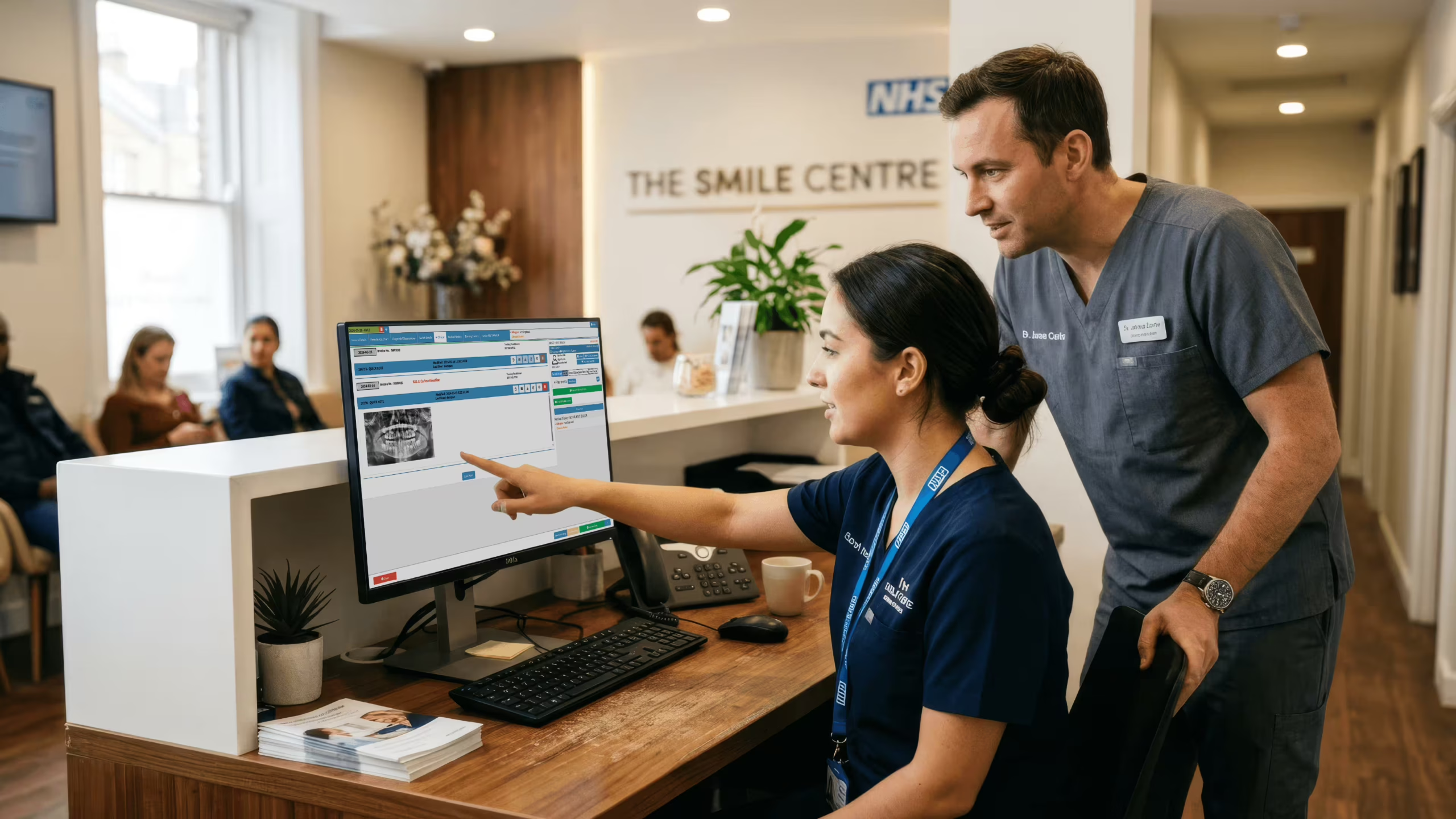
Running a dental practice in the United Kingdom means managing a complex mix of NHS contractual obligations, private patient billing, regulatory compliance requirements, and the daily operational demands of a busy clinical environment. A dental practice management system is the connective tissue that holds all of this together, providing a single platform for scheduling, records, billing, and compliance management.
What is dental practice management software, exactly? And how do UK dental practices go about choosing the right system from the many options available? This guide provides a straightforward answer to both questions and covers the key features that matter most for UK clinics in 2026.
Dental Practice Management: What It Really Involves
Dental practice management encompasses every non-clinical activity required to keep a dental clinic running effectively. This includes appointment booking and diary management, patient communication, clinical record maintenance, treatment planning, billing and payment processing, insurance and NHS claim management, staff scheduling, and compliance reporting.
In a well-run practice, these functions are not separate processes handled by different people using different tools. They are interconnected workflows supported by a single system that allows information to flow from one stage to the next without re-entry, duplication, or manual reconciliation.
Dental practice management software is the platform that makes this possible. When a patient books an appointment, that booking connects to their clinical record, which connects to the treatment plan, which connects to the billing workflow. At no point does a staff member need to re-enter patient details or manually transfer information between systems.
For UK dental practices with both NHS and private patient streams, this integration is particularly important. NHS UDA tracking, private invoicing, and patient account management all need to happen within a single coherent system, not across three separate platforms that require manual reconciliation at month end.
The General Dental Council sets professional and regulatory standards for all dental professionals practising in the UK. Record-keeping quality is a core component of GDC compliance, and a well-implemented dental practice management system is one of the most effective tools for meeting that standard consistently.
Dental Compliance: How the Right Software Keeps You on the Right Side of Regulation
Dental compliance in the UK involves several overlapping regulatory frameworks. The Care Quality Commission inspects independent dental practices against its fundamental standards. The General Dental Council sets clinical and professional standards for individual practitioners. NHS England and the relevant integrated care boards monitor NHS contract performance. And the Information Commissioner’s Office enforces the UK GDPR requirements that apply to patient data.
A dental practice management system that supports compliance does not just store records. It actively makes compliance easier by enforcing complete record-keeping, maintaining audit trails, managing access controls, and generating the documentation that inspectors and contract monitors look for.
CQC inspections, for example, assess whether practices maintain clear evidence of safe, effective, and well-led care. A system with timestamped clinical notes, structured consent recording, automated recall management, and role-based staff access provides exactly this kind of evidence without requiring additional administrative preparation before an inspection.
Patient data protection under the UK GDPR requires that practices handle patient information lawfully, securely, and transparently. Cloud-based dental software that encrypts data in transit and at rest, enforces access controls, and maintains a complete log of who accessed or modified records supports this requirement far more reliably than paper records or locally stored files.
According to the Care Quality Commission, one of the most common areas of concern identified in dental practice inspections is inadequate record-keeping. A well-implemented dental practice management system directly addresses this risk by structuring how records are captured and stored from the outset.
Dental Software: What the Right Platform Should Deliver
The right dental software for a UK practice is not necessarily the most feature-rich option on the market. It is the one that fits the specific workflows of your clinic, supports both your NHS and private patient streams, meets the compliance requirements relevant to your registration, and is backed by reliable support from a vendor with a genuine understanding of the UK dental sector.
What is dental practice management software supposed to deliver operationally? Start with appointment management. The system should handle a complex diary with multiple practitioners, different appointment types of varying lengths, equipment allocation, and nurse chair-side assignment. It should send automated patient reminders and handle online booking if that is part of your patient offering.
Clinical record management is the next critical layer. Treatment notes, periodontal charts, radiograph records, medical histories, and consent documentation should all live within the patient record in a format that satisfies both clinical standards and regulatory requirements. Templates that reflect the documentation expectations of the GDC and CQC make this much faster for clinicians.
Billing flexibility is essential for mixed NHS and private practices. The system should generate NHS UDA reports and private invoices from the same patient record, process multiple payment methods, track outstanding accounts, and provide a clear view of practice revenue across both income streams.
According to Health IT Analytics, the most significant driver of clinician satisfaction with practice management software is the degree to which it reduces rather than adds to documentation burden. Dental software that streamlines note-taking, pre-populates standard information, and generates reports automatically lets dentists spend their time with patients rather than at a keyboard.
Migrating From One System to Another
Many UK dental practices considering a new dental practice management system are already running an existing one. The prospect of migrating patient records, financial history, and appointment data is often cited as a reason for delaying the switch, even when the current system is clearly not meeting the practice’s needs.
A reputable software vendor will provide a structured data migration plan as part of the onboarding process, covering what data can be migrated, in what format, and over what timeline. Understanding this process in detail before signing a contract is important. Ask specifically whether historical patient records, treatment notes, and financial history can be imported, and what support is available during the transition period.
Frequently Asked Questions
What is a dental practice management system?
A dental practice management system is an integrated software platform that manages the operational functions of a dental clinic. It typically covers appointment scheduling, patient records, clinical documentation, billing, NHS UDA tracking, compliance support, and financial reporting. The goal is to bring all practice operations into one connected system that reduces manual admin work and improves accuracy.
What is dental practice management software used for?
Dental practice management software is used to digitise and automate the daily operational tasks of a dental practice, including booking appointments, maintaining patient records, documenting clinical notes, processing payments, managing NHS and private billing, running patient recall campaigns, and generating compliance and financial reports. It is the operational backbone of a modern dental clinic.
How does dental software help with CQC compliance?
Dental software supports CQC compliance by enforcing structured record-keeping, maintaining audit trails that show who accessed or modified records and when, managing role-based staff access, supporting consent documentation workflows, and generating the reporting evidence that CQC inspectors look for. Practices with well-implemented systems typically find compliance inspections much less burdensome.
Can dental practice management software handle both NHS and private patients?
Yes. A well-designed dental practice management system handles both patient streams within the same platform. This includes NHS UDA tracking and reporting alongside private invoicing, payment processing, and account management. Having both in one system eliminates the reconciliation challenges that arise when NHS and private billing are managed in separate tools.
What should I look for when choosing dental software for my UK practice?
Prioritise CQC and GDC compliance support, clinical record-keeping quality, NHS and private billing flexibility, appointment scheduling capacity for your team size, data security and UK GDPR compliance, and the quality of vendor support and onboarding assistance. A structured demo using your actual clinic scenarios is the best way to evaluate how well any system will work in practice.
See How GoodX Can Support Your UK Dental Practice
GoodX is a comprehensive practice management platform built for modern dental and medical clinics. It combines appointment management, clinical records, billing, and compliance tools in one integrated system.