
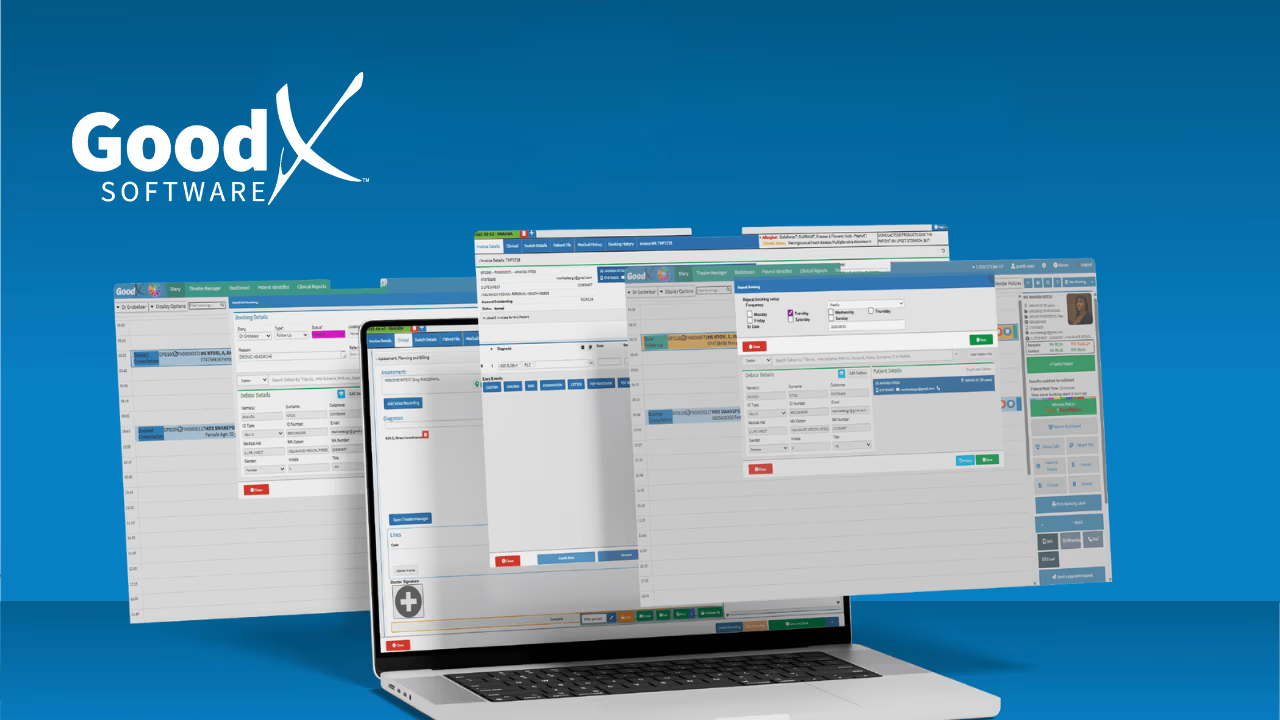
Running a UK general practice in 2026 means working against the clock. List sizes keep growing, the 8am phone rush still defines a Monday morning, and the contractual shift to online appointment booking has made the question of scheduling software a daily operational one rather than a back-office concern. For GPs trying to deliver continuity of care under that pressure, the booking system sitting behind reception is no longer a neutral tool. It either holds the day together or quietly pulls it apart.
GoodX Software is a web-based practice management platform built for UK healthcare providers, with scheduling, patient engagement, billing and clinical records sitting inside a single environment. The point of this article is straightforward: to set out what modern healthcare scheduling software systems actually need to do for a GP practice in the current NHS landscape, and where most legacy systems are now falling short.
The scheduling problem has moved on
Two things have changed since most GP appointment systems were last reviewed.
First, demand. NHS England recorded more than 380 million GP appointments in the year to June 2025, the highest figure on record and roughly 32% above pre-pandemic levels. That volume is not coming back down. Second, regulation. From 1 October 2025, the GP contract requires practices to offer online appointment booking throughout core hours, a change covered in detail by the House of Commons Library briefing on GP online consultations and appointments. The 8am scramble is being structurally dismantled, and the systems that ran it are being asked to do something they were never designed for.
Practices using older diary software, or stitching together a clinical system with a separate online booking add-on, are feeling the strain in a very specific way. Triage and routing decisions sit in one place. Appointment slots sit in another. Patient communication sits somewhere else again. The receptionist becomes the integration layer, and the GP inherits whatever was missed.
Why missed appointments are still the headline cost
The financial argument for better scheduling tends to be made through the lens of did-not-attends, and it remains the most concrete one. Each missed GP appointment costs the NHS roughly £30, and the volume is significant: NHS Nottingham and Nottinghamshire alone reported more than £9.25m lost to missed GP appointments between October 2024 and September 2025, across 308,538 unattended slots.
For a private GP practice, the maths is sharper still, because every empty slot is unbilled time. Automated SMS and email reminders, easy patient-side cancellation, and waitlist auto-fill are no longer optional features. They are the minimum a scheduling system has to deliver to stop revenue leaking through the diary.
GoodX handles this through automated confirmations and reminders, patient self-cancellation through the myGrandCentral portal, and live diary updates that reflect cancellations in real time so the slot can be re-offered rather than sit empty.
What GPs should actually look for in a scheduling platform
A scheduling system for a UK general practice in 2026 should meet a few non-negotiable criteria. The official Appointments in General Practice dataset published by NHS Digital gives a sense of the operational complexity involved: appointments broken down by mode, status, healthcare professional, duration, and national category. Software that cannot record cleanly against those dimensions is going to create work for the practice, not save it.
The features that matter day to day:
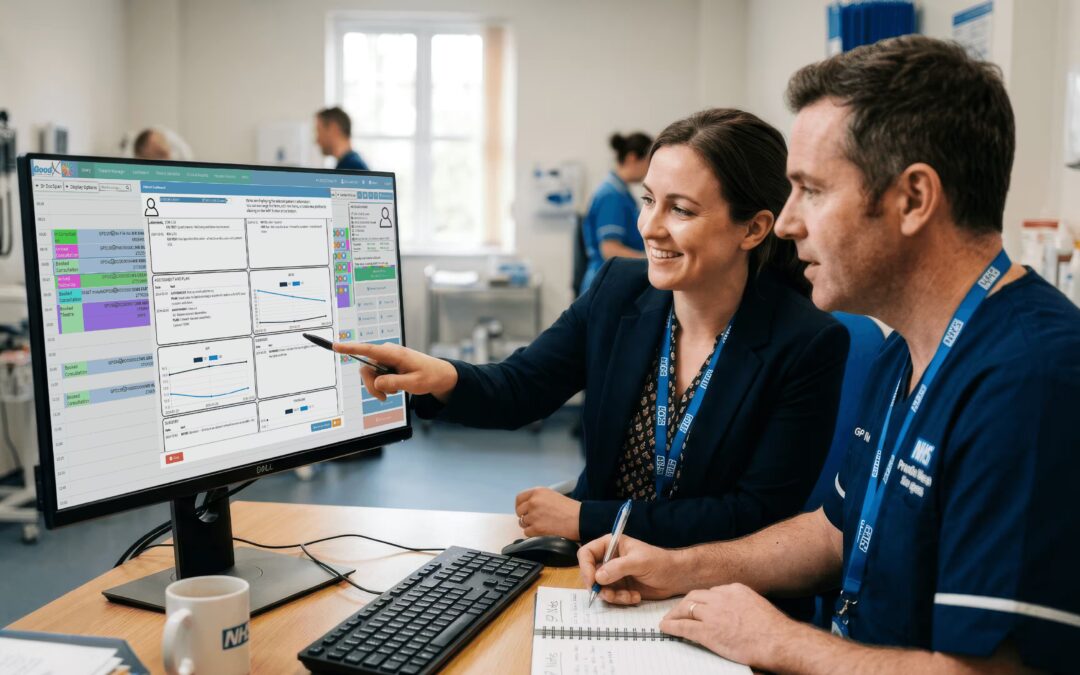
A real-time, multi-clinician diary that can be filtered by location, service and clinician without switching screens. A colour-coded view that gives the duty doctor an honest picture of the day in one glance. Online patient self-booking that respects clinical safeguards and routes urgent requests appropriately, rather than handing every slot out on a first-come basis. SMS and email reminders that run automatically and update when the patient reschedules. Integration with the clinical record so that booking an appointment does not mean re-entering patient details into a separate system. Reporting that surfaces appointment gaps, DNA rates by clinician, and capacity by time of day, so the practice manager can plan rather than react.
GoodX delivers each of these inside one platform, with role-based access so that reception, nursing staff, GPs and the practice manager each see the view that fits their work.
Compliance is not a separate conversation
UK GDPR applies to every line of patient data the scheduling system touches, including booking confirmations, reminder texts and cancellation logs. Any system worth considering should encrypt data in transit and at rest, log activity at user level, and offer role-based access as standard. GoodX is GDPR compliant, holds ISO 27001 certification, and supports two-factor authentication for clinical users.
This matters more than it used to. A scheduling platform that sends reminders by SMS is processing patient identifiable data every time it runs. The audit trail for that activity needs to exist, and it needs to be straightforward for the data protection officer to interrogate.
What changes when scheduling actually works
A well-built scheduling system does not announce itself. The reception phone rings less because patients are managing routine bookings online. The DNA rate falls because reminders are landing in the right place at the right time. The duty doctor opens the diary on a Monday morning and sees an accurate picture of the day rather than a list of slots that may or may not be real. Locums onboard faster because the system shows them what they need to see and nothing else.
For UK GPs, the question is no longer whether to invest in healthcare scheduling software systems. The contract has made that decision. The question is which platform fits how the practice actually works, scales as the list grows, and keeps the clinical day from being eaten by admin.
GoodX is built to do that work.