
Medical billing and coding is the backbone of revenue management in any private practice. Whether you run a small specialist clinic in London or a multi-site GP service across the UK, getting your coding right determines how efficiently claims are processed, how quickly you get paid, and how confidently you can demonstrate compliance with NHS and private insurance standards.
Medical billing coding programs, particularly those integrated with modern practice management software, have transformed how UK practices handle this critical function. This guide explains what these programmes involve, what the best medical billing software looks like, and what role AI is beginning to play in the coding process.
Medical Billing Software
Medical billing software is the digital engine behind a practice’s financial operations. It translates the clinical work a practitioner performs into the codes and claim formats that insurers, medical insurers, and private fee-for-service arrangements require. For UK private practices, this means working with a combination of ICD-10 codes, OPCS-4 procedure codes, and the billing formats required by major private medical insurers such as Bupa, AXA Health, and Aviva.
The right medical billing software does far more than generate invoices. It integrates with your clinical records, pulls the relevant diagnostic and procedure codes from the consultation, validates the claim before submission, and tracks outstanding payments. When a claim is rejected or queried, the system flags it for review rather than letting revenue slip through the cracks. NHS Digital’s coding standards provide the foundational reference framework that quality medical billing software should align with, even in private practice settings.
What to Look for in Medical Billing Software for UK Practices
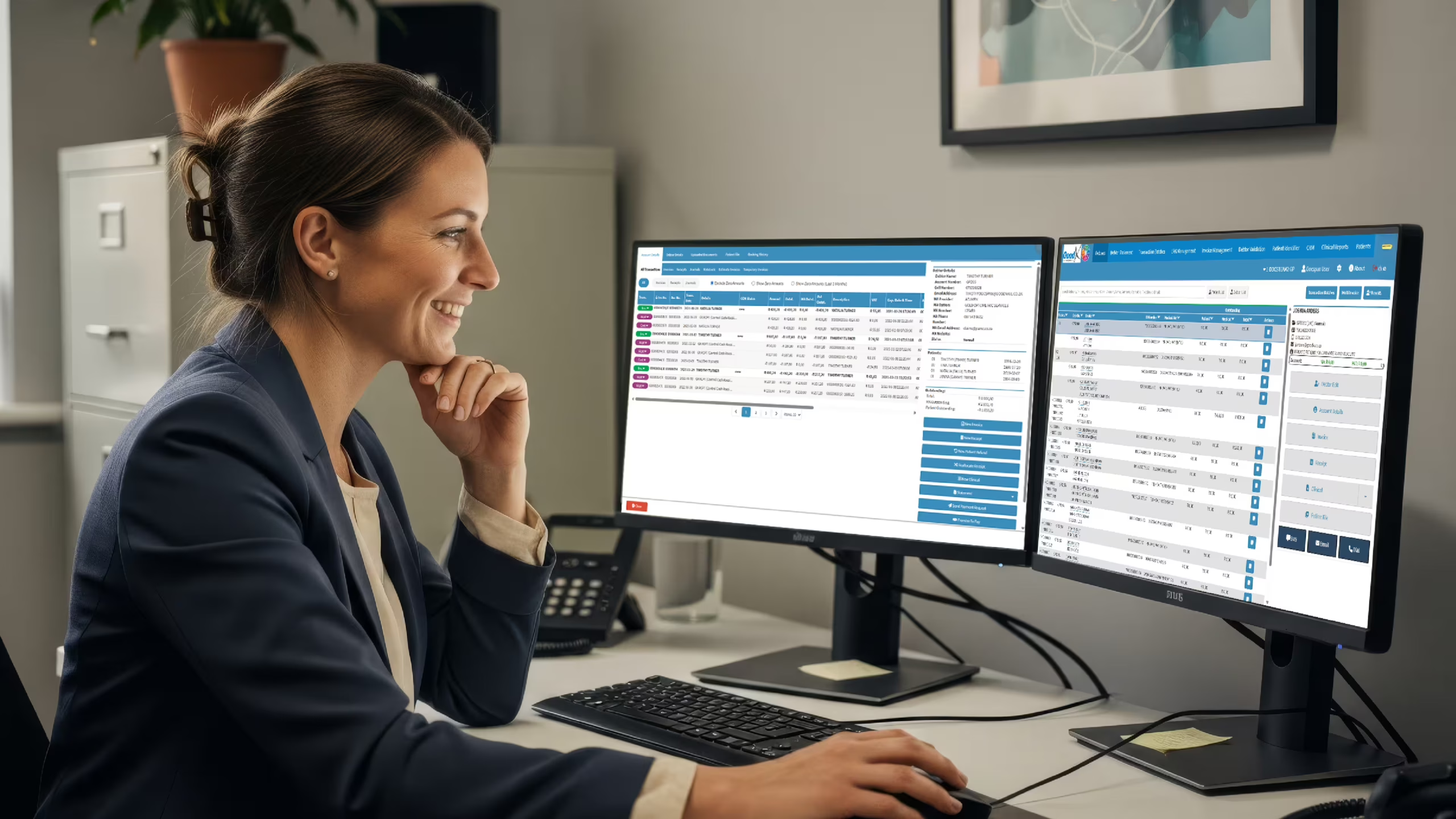
The most important feature of any medical billing software is accurate, integrated coding. A system that requires manual code entry after the clinical record is created introduces error and delay. The best platforms, like GoodX, link the diagnosis and procedure data entered during a consultation directly to the billing module, so the claim builds itself from the clinical workflow rather than being a separate administrative task.
Beyond coding accuracy, look for software that provides real-time claim tracking, clear rejection management workflows, automated patient invoicing, and reporting that lets you monitor your revenue cycle at a glance. For UK practices with multiple practitioners, role-based access and per-practitioner reporting are also essential features.
The British Medical Association provides ongoing guidance on billing standards and fee schedules for UK private practitioners. Your medical billing software should be flexible enough to accommodate these requirements and to update as fee schedules evolve.
Will AI Eventually Replace Medical Coders?
This is one of the most frequently asked questions in healthcare administration circles, and it reflects a genuine uncertainty about where the profession is heading. The short answer, based on current evidence and the actual capabilities of AI in medical coding, is that AI is augmenting the role of medical coders rather than replacing it.
What AI Can Do in Medical Coding Today
Current AI tools in medical billing coding programs are capable of analysing clinical notes and suggesting appropriate ICD-10 or OPCS-4 codes based on the documented diagnoses and procedures. They can flag potential errors, identify missing codes, and compare submitted claims against historical patterns to detect anomalies. These functions save time and reduce errors in straightforward cases.
Where Human Expertise Remains Essential
Complex cases, unusual diagnoses, multi-system conditions, and situations where the clinical documentation is ambiguous all require the contextual judgment that trained medical coders bring. AI systems also require regular validation and oversight to ensure that the codes they suggest are accurate and appropriate for each specific case. In a UK regulatory context, incorrect coding can affect CQC compliance, insurance audits, and NHS contract performance for practices that straddle both sectors.
Research from the Lancet Digital Health and other major journals consistently shows that AI in clinical and administrative workflows performs best as a decision-support tool alongside experienced professionals, not as a standalone replacement. For the foreseeable future, practices that invest in both quality medical billing software and skilled coders will outperform those that rely on either alone.
The Practical Takeaway for UK Practices
AI-assisted coding in your practice management software is a genuine efficiency gain. It reduces the time your coding staff spend on routine claims and helps catch errors before submission. But the expertise of your coding team remains a competitive advantage, particularly for complex or high-value claims. The goal is a well-integrated medical billing coding program that makes your coders more effective, not one that sidelines them.
What are the 4 Types of Medical Coding?
Understanding the different types of medical coding helps practices choose the right tools and training for their specific setting. In the UK private sector, you will encounter four main coding categories, each serving a distinct purpose in the billing process.
1. Diagnosis Coding (ICD-10)
The International Classification of Diseases, 10th Revision (ICD-10) is the global standard for coding diagnoses. In the UK, ICD-10 codes are used to document the reason for each clinical encounter and are required by both NHS and private insurers. Accurate diagnosis coding determines whether a claim is accepted and at what level it is reimbursed.
2. Procedure Coding (OPCS-4)
The OPCS-4 Classification of Interventions and Procedures is the UK-specific system for coding surgical and clinical procedures. It is used across both NHS and private settings to document what was done during a patient episode. Correct OPCS-4 coding is particularly important for procedure-heavy specialties such as surgery, radiology, and obstetrics.
3. Evaluation and Management (E&M) Coding
E&M coding captures the complexity and duration of a consultation or clinical evaluation. For UK private practitioners, this typically relates to how the practice charges for consultation time and complexity rather than a specific procedure. Accurate E&M coding ensures that practitioners are appropriately compensated for the time and clinical judgment invested in each patient encounter.
4. Specialty-Specific Coding
Beyond general diagnosis and procedure codes, many specialties have their own additional coding requirements. Ophthalmology, oncology, mental health, and physiotherapy all have specific code sets and billing conventions. Medical billing coding programs designed for specialist UK practices should support the relevant specialty codes alongside the standard ICD-10 and OPCS-4 frameworks.
Frequently Asked Questions
What are medical billing coding programs?
Medical billing coding programs are software platforms that translate clinical diagnoses and procedures into standardised codes used to generate and submit insurance and fee-for-service claims. In UK private practices, these programs work with ICD-10, OPCS-4, and insurer-specific formats to produce accurate claims that are validated before submission.
What is the best medical billing software for UK practices?
The best medical billing software for UK private practices integrates clinical coding directly with the consultation record, validates claims before submission, tracks outstanding payments, and provides clear revenue cycle reporting. GoodX is a purpose-built practice management and billing platform that combines these functions with clinical EMR capabilities in a single system.
Will AI replace medical coders in the UK?
AI is increasingly assisting with routine coding tasks such as code suggestions and claim validation, but it is not replacing trained medical coders. Complex diagnoses, multi-system conditions, and regulatory compliance requirements still demand human expertise and contextual judgment. AI makes experienced coders more efficient rather than making them redundant.
What are the 4 types of medical coding used in UK practices?
The four main types are: diagnosis coding (ICD-10), procedure coding (OPCS-4), evaluation and management (E&M) coding for consultation complexity, and specialty-specific coding for disciplines such as ophthalmology, oncology, or mental health. UK private practices need medical billing software that supports all four categories relevant to their specialty.
How does integrated medical billing software improve claim accuracy?
Integrated medical billing software pulls diagnostic and procedure codes directly from the clinical record, which eliminates the manual re-entry of data that causes most coding errors. Claims are validated against insurer rules before submission, and rejected claims are flagged for immediate review. This combination significantly reduces the rate of claim rejections and shortens the payment cycle.
See How GoodX Handles Medical Billing for UK Practices
Medical billing coding programs work best when they are fully integrated with your clinical records and practice workflows. GoodX gives UK private practices a single platform for patient management, clinical documentation, and billing, designed to reduce administrative overhead and improve claim accuracy from day one. Book a free demo to see it in action.